Lacustrine paleoecology and paleoclimatology
In contrast to ice cores
that primarily reflect hemispheric
scale temperature-related climatic processes, lake records tend to
reflect
regional scale climate variability. High latitude and high altitude
lakes have
been shown to be particularly sensitive to changes in climate, and
sediment
records from these lakes have great potential to document changes in
climatic
conditions over time. Sediment proxies that provide information about
paleoclimatic and paleoecological conditions include fossil pollen,
sediment
magnetic susceptibility and grain size, organic and inorganic carbon
content,
carbon to nitrogen ratios, and the isotopic composition of elements
such as
carbon, nitrogen, and oxygen.
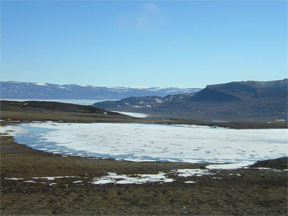
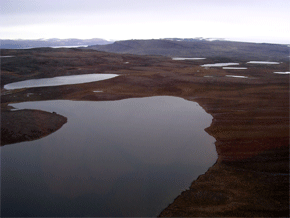
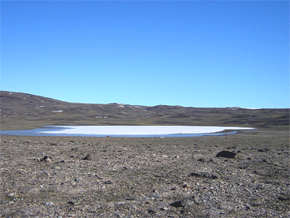
Lakes near Thule
Several small lakes near
Thule
are of interest for paleoclimatological and paleoecological studies,
including “
Char
Lake
”
on
North
Mountain
,
“
Horseshoe
Lake
”
in
Dundas
Valley
,
and “
Old
Squaw
Lake
”
in the valley below BMEWS. It remains uncertain whether these lakes
contain
continuous, undisturbed sediment records, but we are in the process of
assessing their utility.
Current work and future goals
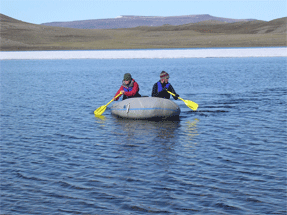
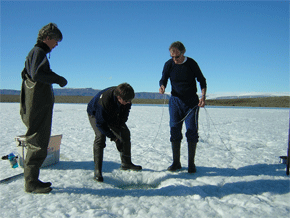
In summer, 2004 we
measured water depth, pH, conductivity, and
temperature of all three lakes, and collected surface water samples. We
also
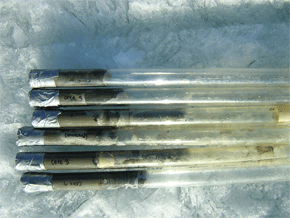
extracted several short cores from “
Old
Squaw
Lake
”
with a gravity corer.
In fall, 2004 we will
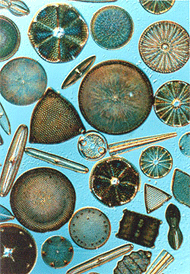
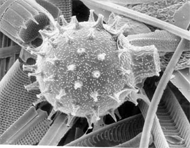
measure the isotopic composition of
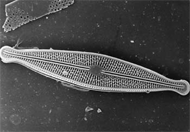
oxygen in silica from diatoms in the sediment of “
If the sediment records of “Char,” “Horseshoe,” and “Old Squaw” lakes are deemed sufficient, we would like to extract sediment cores from each lake and use the records to reconstruct paleoenvironmental conditions in the Thule region over the past ~2,000 years. We would also like to incorporate a modern component that investigates carbon cycling in High Arctic lacustrine ecosystems as a means to understand and interpret exactly what is being deposited into the lake.