Hydrology and Solute Transport Studies

The amount, temperature, and quality of freshwater runoff from high latitude areas ultimately affect water stratification, nutrient cycling, and formation of deep water currents in the ocean. Freshwater is conveyed from Greenland to the ocean in a multitude of medium sized rivers for which little is known about discharge and water quality.

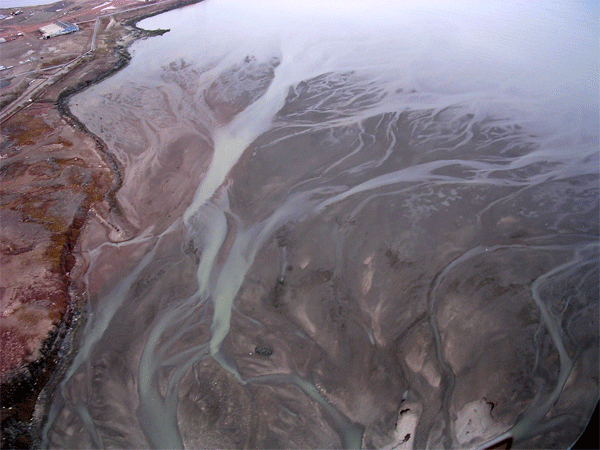
We study 3 drainages from North Mountain with drainage area of 5 km2, North River with ice free drainage area of 100 km2 and South River with ice free drainage area of 150 km2.

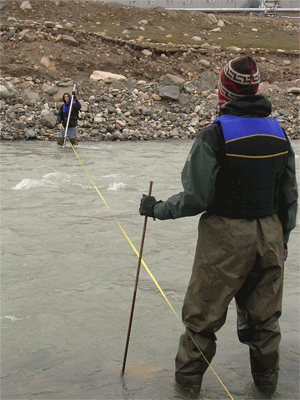
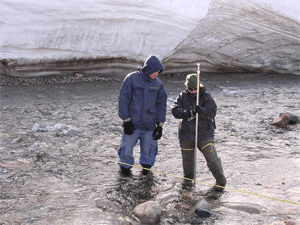
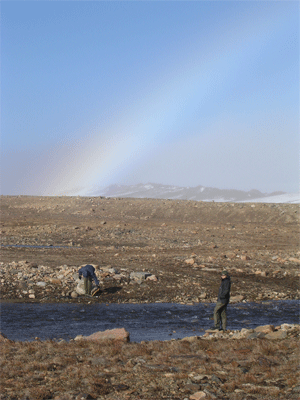
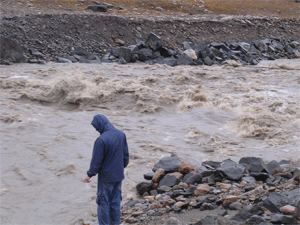
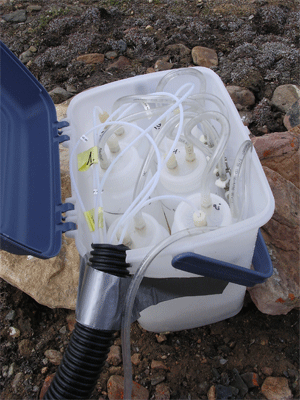
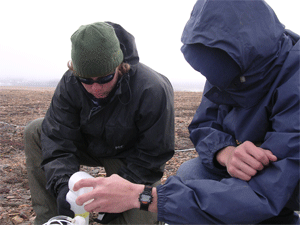
To address how seasonal weather pattern and landscape processes affect runoff and water quality, as well as examine weathering and carbon budgets in the drainage, we monitor water discharge, water temperature, and water chemistry (cation, anion, dissolved organic and inorganic carbon) of these rivers. North River and South River originate as melt water runoff from the Greenland Ice Sheet. The North Mountain stream is fed by local snowmelt and summer rain events. Climate data along with soil moisture and temperature are recorded with automated stations at two locations. The potential sources of river water are thawing permafrost, local snowmelt, rain, and melting of glacial ice that have a discriminative isotopic signature of water (δD and δ18O). Stable isotopes therefore, are used to separate the hydrograph into these sources to help us relate discharge pattern and water quality to climate (precipitation, temperature) and landscape processes (thawing of permafrost, weathering, decomposition of organic matter). To trace the origin of dissolved nutrients and to study the cycling of nutrients through the atmosphere – soil – plant system we measure Sr isotopes (87Sr/86Sr) in soil and stream water.